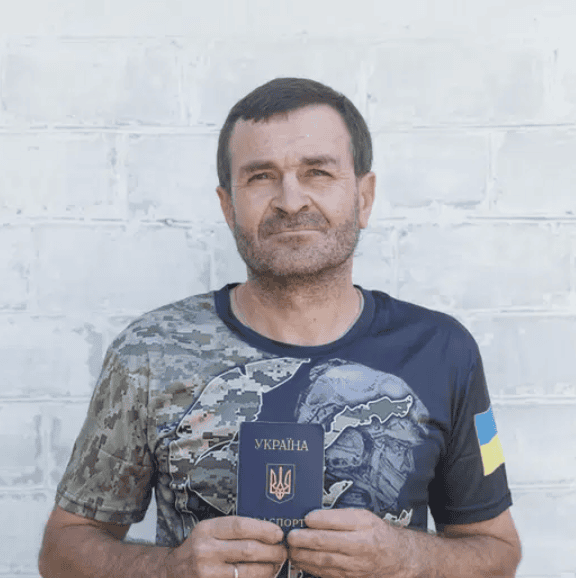
I gave it all up for the sake of the future and only managed to take my Ukrainian passport and one set of clothes with me
Viacheslav, 48 years old, Kherson Oblast
Giving it all up for the sake of the future
"We remember this moment clearly," recalls the beginning of the full-scale invasion Viacheslav. "We were sleeping, of course. At 4:10 AM, we heard the first explosions, and not just us, but the children also woke up."
Before the full-scale invasion, the man used to work in the village council and then on the fields. He has a large family — a wife and three small children. They spent two years in the temporarily occupied territory.
They managed to leave with only a few belongings.
This publication was created as part of the “Territories are people” campaign, which assists Ukrainians in returning from the temporarily occupied territories to the Ukrainian-controlled territories and in adapting there.
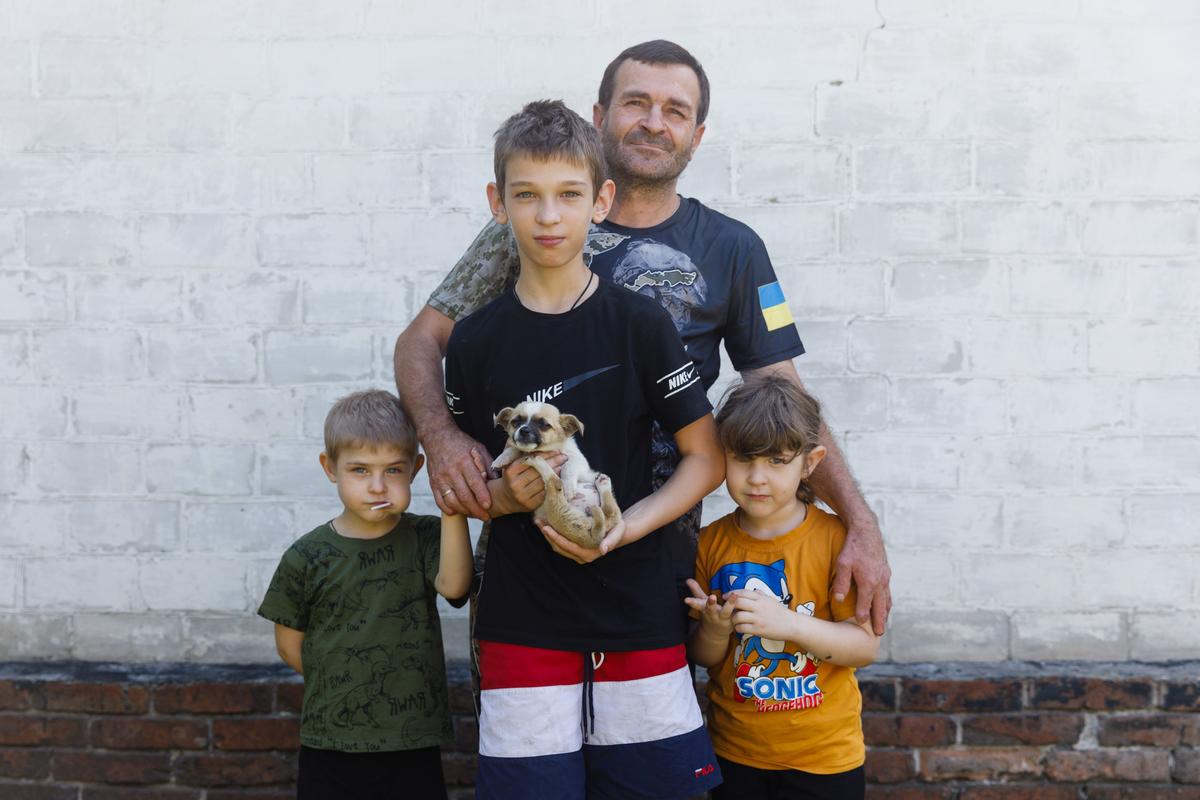
Photo by: Mykhailo Palinchak
Viacheslav and his family have been thinking about leaving the occupation since the beginning of the full-scale invasion.
"We were constantly thinking about evacuating, from the very first days. It was just not so easy to organize. The car columns were dispersed, and there were no drivers who could help. The prices were too high," he explained.
In the end, the decision to evacuate the family came about because of volunteers.
"We found volunteers from the Helping to Leave organization, which helped us evacuate," the man said.
In the temporarily occupied territory, their lives were constantly under threat. The occupiers would come to their house and turn everything upside down in search of anything unusual.
"We were subjected to inspections almost every day. There was a threat every day for me and my family," he says.
Once, Viacheslav was almost detained by the occupiers.
"It happened because of a tip-off; someone said that I was allegedly transmitting locations and data to the [Ukrainian-controlled] territory. They were looking for a map, but fortunately, I was not taken in."
Before the evacuation, they had doubts and fears, in particular about undergoing filtration and crossing the buffer zone.
"It was unclear whether we would be able to get through or not," he said.
However, they decided to take the risk, and with the help of Helping to Leave, they were able to safely evacuate. His wife and children were leaving after Viacheslav, and their journey was more or less safe.
"At the border, they asked her where I was and why she was crossing the border to Ukraine. She explained that she was taking her sick child abroad for treatment. We have a child with a disability, and it made it easier to move around in a way,"
he explained.
The understanding that the family was leaving their home for an indefinite period of time was painful.
"We had to give up everything. We didn't just live there for a year or two. We had a home,"
Viacheslav recalls.
The man took only a few things with him from the occupation.
"I traveled with a handbag, documents, and the clothes I was wearing. I didn't know if I would be able to leave and pass the filtration. So I didn't take anything with me," the man said.
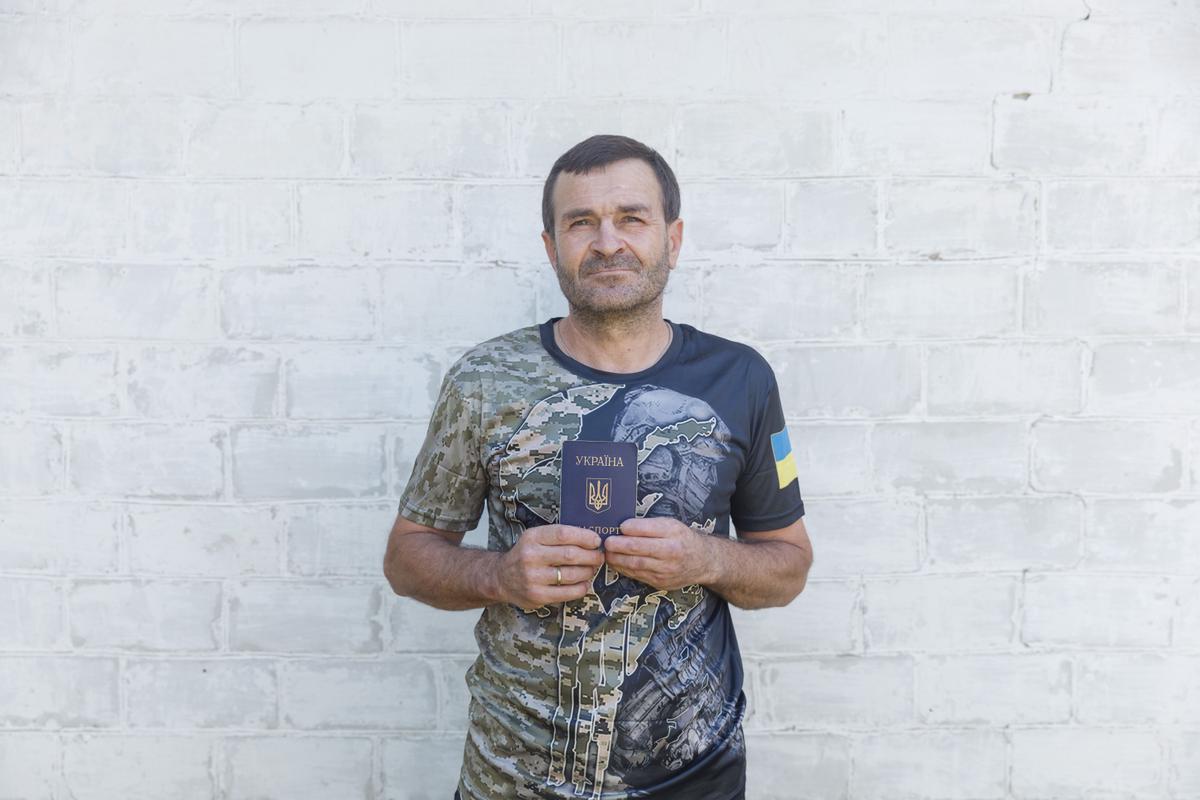
Photo by: Mykhailo Palinchak
Adapting to the new place proved to be less difficult for him, as he had lived in Poltava Oblast for more than 20 years.
"I have relatives here, my sisters. I had support. The hardest part was waiting for my wife and children to arrive," he shared.
When asked why people stay in the temporarily occupied territories, he spoke of three main categories.
"More than half of the people who are willing to leave are afraid to do so. The second category is those who support the "russian world". And the third is those who simply do not have the means to evacuate. They can't even pay for a car to get to Chaplynka, from where I continued my journey. They don't even have the money to buy a train ticket or a pastry. Without a russian passport, they cannot buy medicine or go to work. They survive on what they grow in the garden or get from a cow," the man explained.
He also noted that many people consider the evacuation too risky.
"At the beginning of the [full-scale] war, the russians were simply shooting at the convoys. We were ready to leave then, but it was a big risk for the children and all of us. People saw shelled cars and bodies along the road, so they didn't risk leaving,"
he said.
According to Viacheslav, those who did not take a russian passport are surviving only thanks to their own farms.
"People manage by having their own house, animals, and gardens. Or they get a russian passport, go to work, and sign up for their health insurance. But for me, this is something horrible."
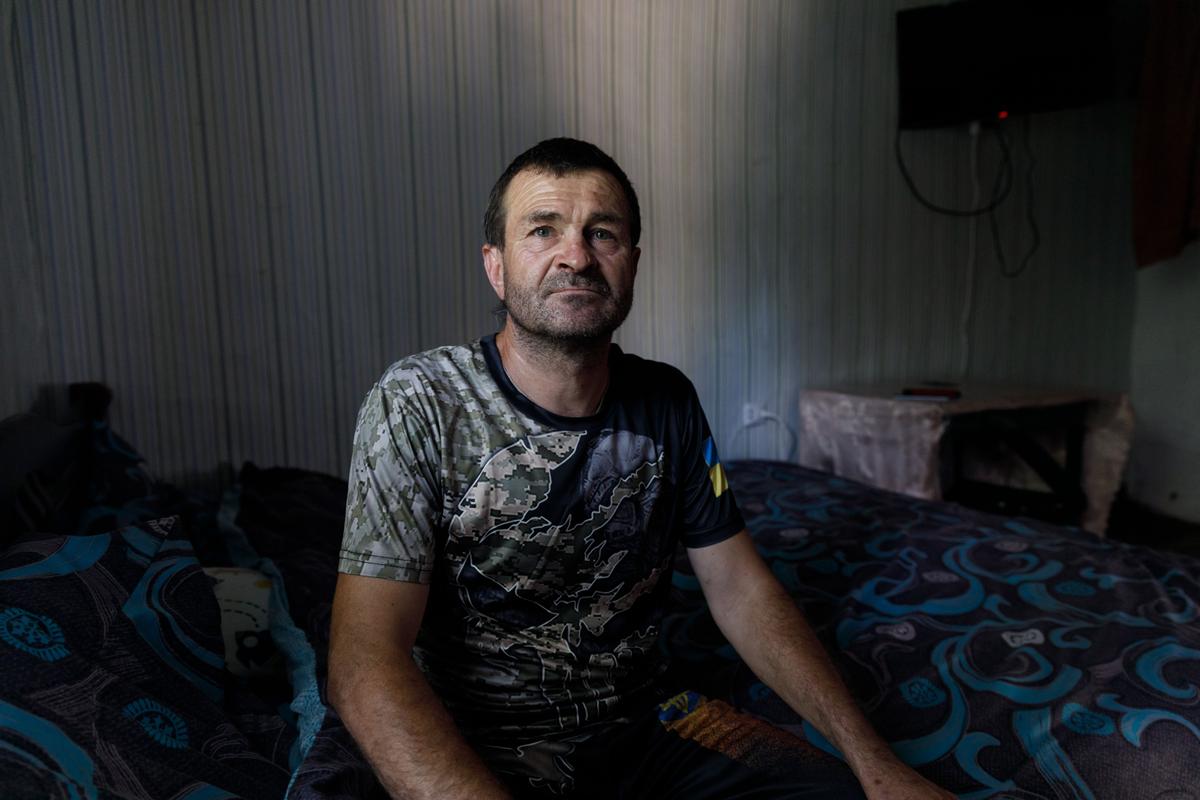
Photo by: Mykhailo Palinchak
"Now we are adapting to the new conditions, preparing documents for our son to be examined in a clinic, and dealing with IDP registration. Most of the time, we are busy with paperwork. We want our children to go to school, our youngest to go to kindergarten, find a job, and continue living," said Viacheslav about his current affairs.
When asked about his biggest dream, he answered simply and sincerely: "I wish for the war to end. For victory to finally come. A lot has been sacrificed for this. There are a lot of friends and relatives who, unfortunately, are no longer with us. My brother was killed on the Kherson front, not far from us, when the full-scale invasion began. They did not make it to us by a little bit."
Interview and story by Yuliia Kalaban