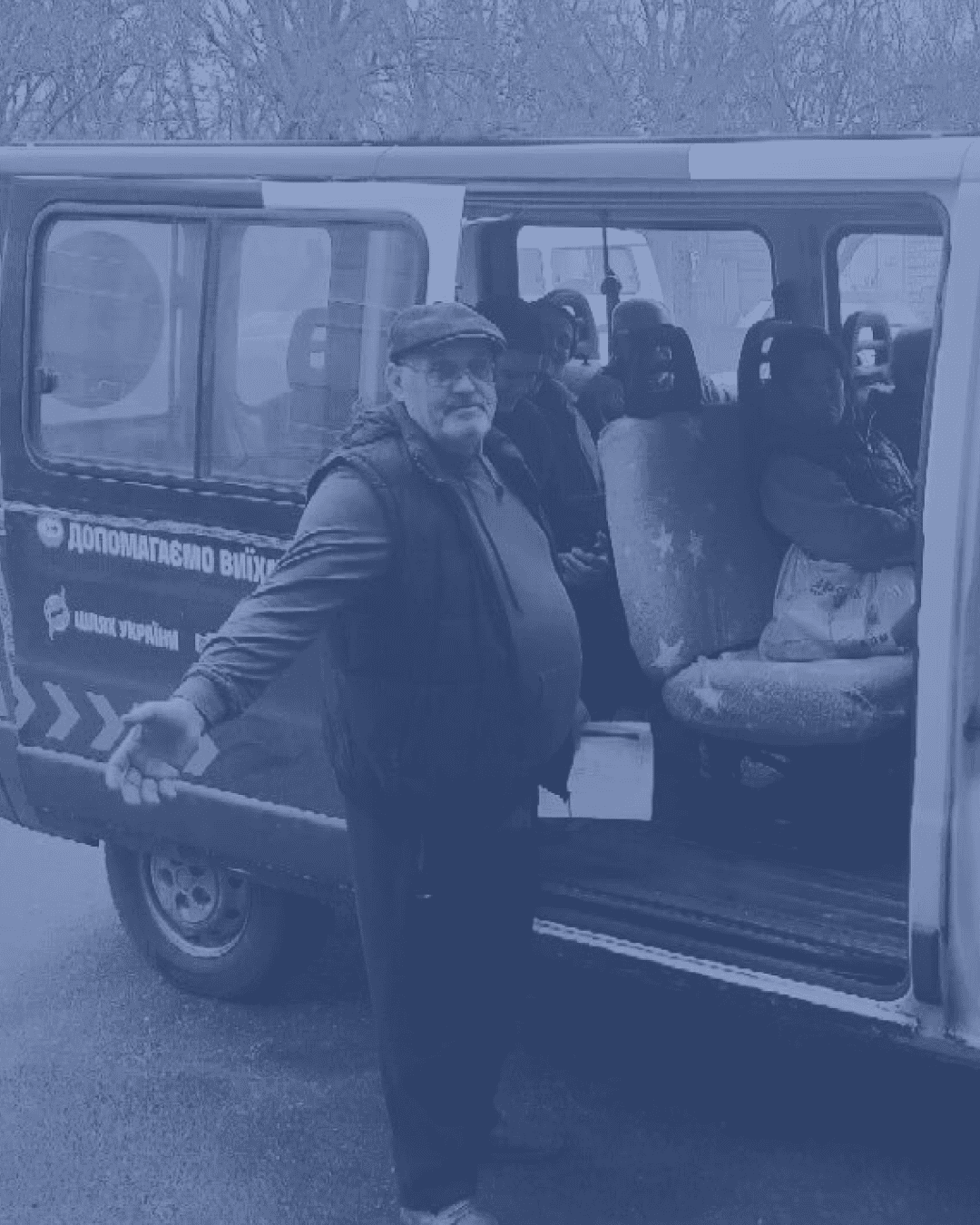
“I can't do otherwise, I've made a promise!”
Interview with Andrii Hryhorovych, evacuation team specialist for the Kherson Oblast at Helping to Leave
Andrii Hryhorovych evacuates people from Kherson and the region. He knows what danger is because the people of Kherson experience russian terror every day. Each of his morning evacuation trips means more rescued people and their stories, which he shares in this interview.
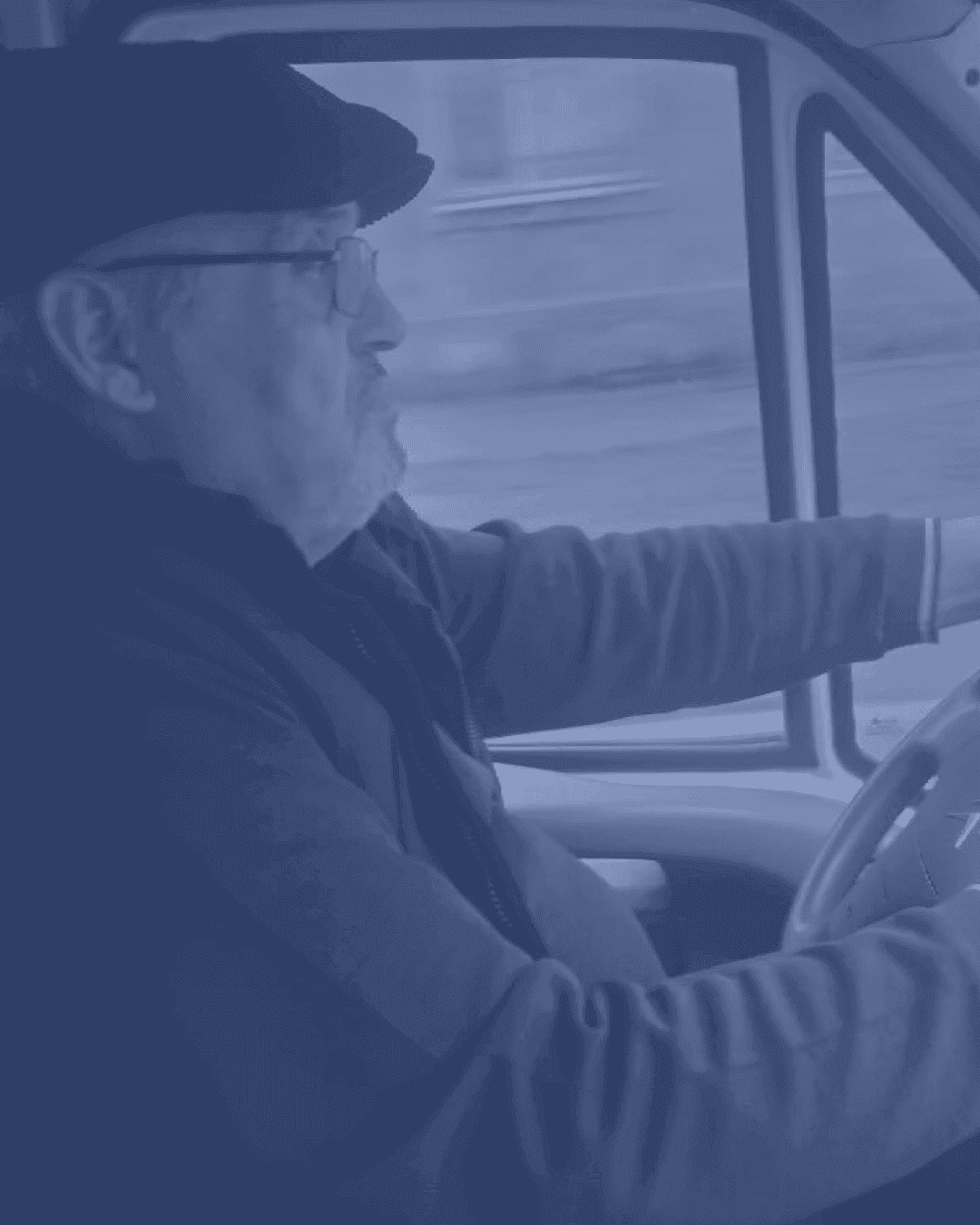
– What did you do before the full-scale invasion? How has it changed your life?
– I am an entrepreneur. I used to repair cars and still do. I have a service station. I am also the head of the Black Sea Cossacks public organization. At the beginning of the full-scale invasion, my guys, the Cossacks, and I immediately went to the recruitment office. But we were not enlisted. Then we created a territorial defense unit — we made Molotov cocktails and prepared whatever was necessary. Then we started delivering humanitarian aid to villages in the Kherson Oblast. Later, we also began evacuating people from Kherson and the oblast. I became a volunteer with the organization when I met Yuliia, evacuation coordinator at Helping to Leave. Just now, Yuliia called me and said, "Andrii Hryhorovych, we have an evacuation tomorrow!" So tomorrow I'll wake up at 4 AM and go to Kherson.
– Do you often have to wake up so early?
– Today is the fourth day in a row. I leave Odesa at around 5 AM and arrive in Kherson after 7. I pick people up, drive for three hours, and return to Odesa at around noon. This is my regular route.
I feel like the car already knows where to go. The road is well-trodden, and I know every bump. I don't get stopped at the checkpoints because they recognize me; I drive through almost every day. And my bus is quite noticeable, it has the words “Helping to Leave” written on it.
As they say, one can get used to anything. I can't do otherwise now. Even on days when I don't have to go, I still wake up at 4 AM; I never set an alarm. It's become instinctive.
– So this is your usual route, but where else do you evacuate people? Do you spend a lot of time on the road?
Sometimes the trips are much longer. Once we took a family to the Ternopil Oblast, which was two thousand kilometers there and back. It was a pregnant woman with six children. They were lovely children and behaved very well. We drive people wherever they need to go and for as long as necessary — whether to Dnipro or the Mykolaiv Oblast, where elderly people and people with disabilities are being accommodated.
– How safe are these routes?
– It varies. Once we were picking up a family from the Kherson Oblast. We drove up to a house near the river and stood there while they loaded their belongings. Oleksii, a volunteer who came with me, said, "Hryhorovych, hurry up, there are drones flying around!" So we all quickly got into the car and drove away. There was another time when I had just arrived and was told that some guided bombs had just flown by and four missiles hit the area. I parked the bus under some trees, got everyone on board, waited a bit, and drove off.
– How do your family and friends feel about your volunteering?
– My wife is wonderful, she supports me a lot! In the evenings she tells me to go to bed and rest because I have to wake up early. As a wife and grandmother of our grandchildren, she is the best in the world! The guys at work, at the service station — my Cossacks — they all support me too.
But there are all kinds of people. Some acquaintances ask, "Hryhorovych, why do you bother? You're over sixty, what's the point?" I say, "I can't do otherwise, I've made a promise. If I don't go, who will?"
– That's really inspiring! And what do the people you drive, the people you evacuate, say?
– When I'm in my car with someone, I always ask them questions. They tell me things, I tell them things. Even though I'm seeing them for the first time, we often talk as if I've known them for years. People tell me about their lives, they pour their hearts out.
– Once I was evacuating an 82-year-old woman. She said, "We don't have a village anymore..." Their houses have been destroyed, there is no electricity, no running water, and yet the russians continue to launch drones at them. Sometimes they even target dogs. It's awful! She said, "My neighbor and I don't know where it's better for us to be, on the street or in the house. Half of my house is already gone." I am looking at her, and tears begin to well up in my eyes.
I feel so bad for these people. I think there is nothing worse than being left without a home, without a roof over your head. Recently, a 55-year-old man was traveling with us, a calm, quiet man. I asked him, "Where are you going?" And he said, "I don't know."
How can that be? Where will he sleep? So I took him to my service station, where there is a room, and let him stay there for now. He cleans the place a bit, helps me out.
– What else do people say about life near the front line?
– Oh, of course, it's hard for them there. Even now, there are areas in Kherson where there is no electricity, the windows are all smashed, and people are covering them with whatever they've got. There used to be more help. I myself delivered humanitarian aid to the villages while I still could. I picked up food and other stuff from churches and drove it to villages to give to older women who were living there alone. There are many people there who cannot leave. Those who could got in their cars and left, and those who couldn't stayed. They cover their windows with plastic wrap and somehow survive.
– How do you take care of your emotional state and safety? Do you have any particular way of coping?
– I've gotten used to all of this. Recently, I went to pick up a woman from the hospital. And she said to me, "I'm not going anywhere! I'll just lie down here, that's it!" I asked for her name and said, "What, Oksana, you don't want to go?" — "I don't want to!" — "God forbid, tomorrow there will be an air raid, and if the russians hit the hospital, what will you do? Your house was destroyed, and what about this place?" I sat down next to her, held her hand, and we talked. She told me, "I feel that you are a very good person!" In the end, we worked it out that her husband was about to have surgery. So we will evacuate them both after that, because she didn't want to go without him.
– What a touching story! Tell us more about what inspires you.
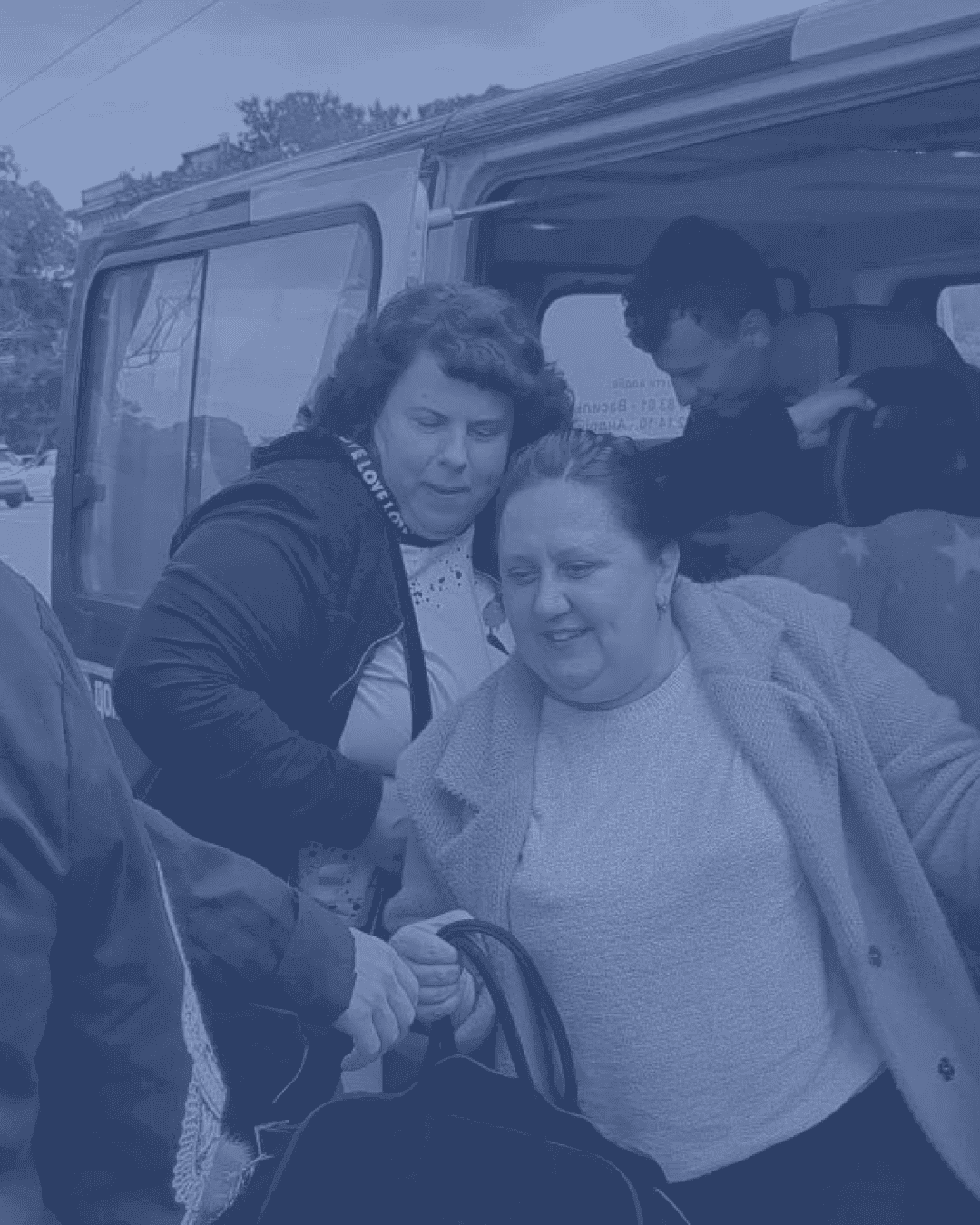
– I am really happy when I drop people off and they say, "Oh, thank you! Thanks!" They often ask me for my phone number. I've put it on the bus so that anyone who needs it can write it down.
If I didn't enjoy this, I wouldn't be doing it. No one can force me to or prevent me from doing this!